
It has been a long long time since I had to wake up before the sun rose. Having no experience in birdwatching, I left home light: with a water bottle, insect repellent and my phone for taking photos. I realised my mistake when I arrived and saw people armed with some of the biggest cameras I have ever seen. Lesson learnt for the next time, as I only got photos of the macaques and a toad resting in a tree. Cute, but not the photos I was expecting on a bird tour.
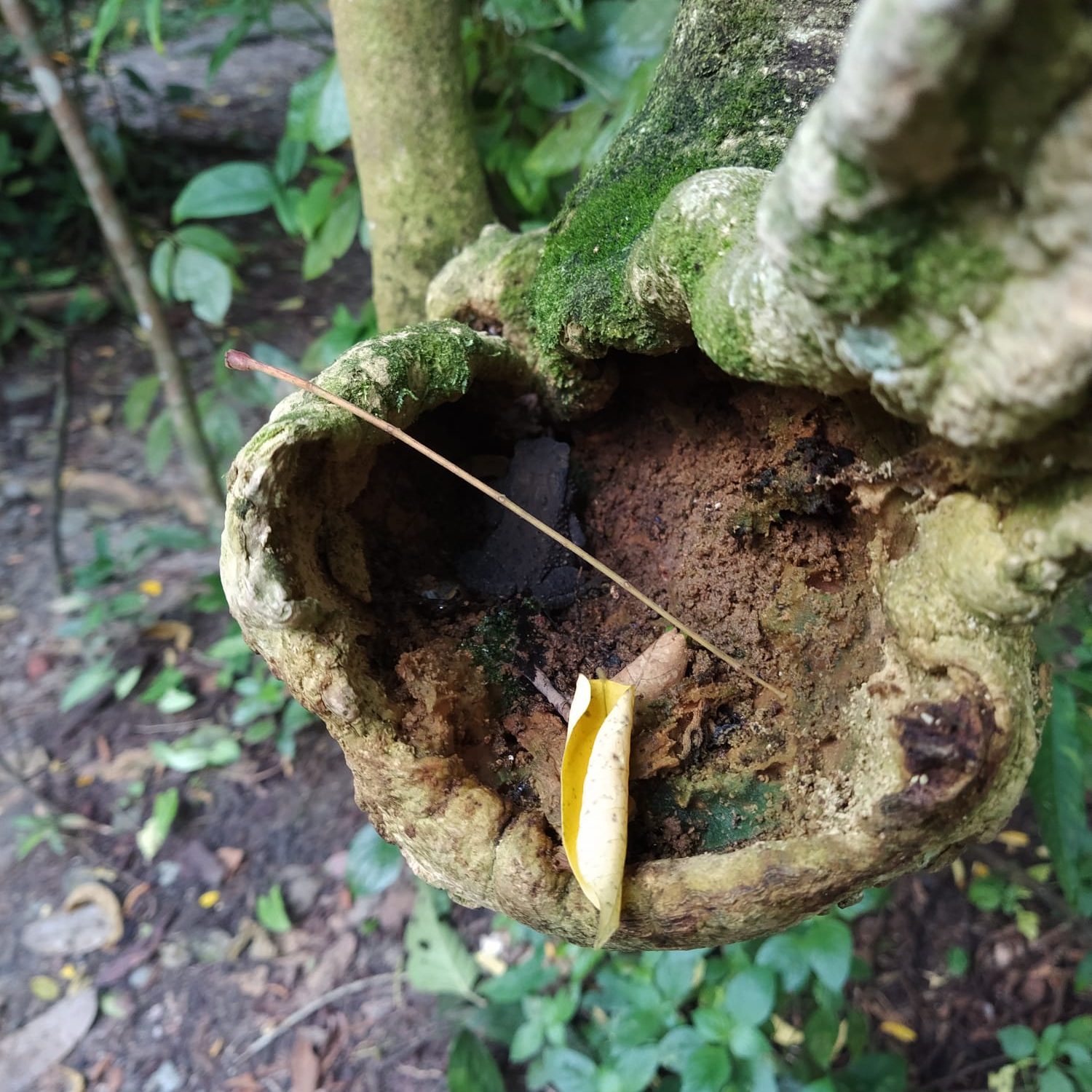
The tour itself was very enjoyable, despite my lack of photos. It has been quite some time since I last had the time to go on a nature walk, and I was glad that we spotted quite a number of interesting wildlife. Or heard, mostly. I never knew how noisy the forest could be in the early morning, but what was even more amazing was that our guide Jeff could match the multitude of calls to specific species of birds. Not only that, he was able to pinpoint the bird on trees with little effort. Thanks to him, I was able to take a look at them through a borrowed pair of binoculars, though most of the time the tiny birds only appeared as a tiny black blob perched at the top of very tall trees. A better view of the birds were offered through the photos taken by the aforementioned gigantic cameras. There were Asian glossy starlings, heard and spotted right at the start of the walk. Then there was a racket-tailed drongo resting on a tree, though the poor thing had lost both of its “rackets”. Other birds spotted included the Dollarbird, the Green-backed flycatcher, a Red Junglefowl walking through the trees and Long-tailed parakeets. We heard many more birds that we sadly did not manage to catch a glimpse of, such as the Red-crowned Barbet and the Dark-necked Tailorbird.
On top of learning about different types of birds, we also learnt about some important plants that were found in the nature park. There is the Australian Mulberry Tree, which is a food source to many birds as well as other animals. There was a spot in direct view of a large Australian Mulberry Tree that was supposedly great for spotting birds, but that tree was taken over by macaques, hence there was no bird in sight. Yellow stem-figs is another major food source, with many trees scattered across the park. We also passed by a magnificent Strangler Fig, which is said to be a keystone species. Such figs can increase the conservation value of a nature park, as explained by Jeff, due to its ecological and sometimes cultural importance.
All in all, it was a very enlightening trip that taught me many things about birds and nature. The refreshing walk was well worth the effort of dragging myself out of bed before 6AM and I look forward to more chance encounters with different wildlife on future field trips!
 BFF Biodiversity Challenge 2022