Horseshoe Crab Rescue & Research at Kranji-Mandai mangrove mudflats (7 April 2022)

Entrance next to a newly constructed factory building

The Horseshoe Crab Rescue & Research event was conducted by Lester from Nature Society Singapore (NSS) at Kranji-Mandai mangrove mudflats on 7 April 2022, 7.30 am.

This morning, I arrived about 15 minutes late at the meeting venue as I had underestimated the travelling time for cycling, and the intermittent rain caused the roads to be wet and slippery.

Thanks to my team for giving the directions, I managed to find my way to the correct entrance to the mudflats.

Litter near the gate

Upon entering the gate, the first sight that greeted me was the sheer amount of rubbish strewn on the ground.

Gosh, it’s been nearly a decade since I last came here for a similar event conducted by NSS, where we cleaned up the beach, and this place has been dirtied again? I thought to myself.

New mangrove shoots on the beach

Thankfully, as I made my way to the beach where the mudflats were exposed at low tide, I saw very little litter on the sea shore, which appeared fairly clean and undisturbed for the most part.

I was also glad to see mangrove saplings taking root on the mudflats, which suggests that the mangroves are in the process of restoration.

I spotted my team members gathering on the mudflats some distance away, and I walked gingerly on the soft muddy shore towards them, hoping not to get my shoes wet.

Alas, I soon found myself sinking ankle-deep into the mud at one point, and I resigned myself to having to trudge around in soggy shoes and socks.

Perhaps as a consolation, I chanced upon a tiny horseshoe crab, which was barely conspicuous against the dark muddy ground surface.

A baby horseshoe crab

I signalled to Lester to come over and take a look to see if it was dead or alive, as it appeared to be staying still instead of crawling around slowly.

Just then, another group member found a bigger horseshoe crab and passed it to Lester, and he began to share with us interesting facts about horseshoe crabs, such as their physiology, gender differences, feeding habits, conservation status, how to pick them up without injuring them, and how researchers would rescue and measure them before releasing them back into the wild.

Lester demonstrating how to hold a horseshoe crab properly to avoid injuring its tail

Then my group members continued to comb the mudflats for horseshoe crabs and other marine and seashore creatures, while I stayed around my little zone, hoping not to step on any horseshoe crab by mistake, since they were hard to spot and they also have become rare and endangered in the world over the years.

Lester briefed the group about other marine creatures found at the mudflats, such as crabs.

Meanwhile, I was glad to see another small horseshoe crab (which appeared to be moving its tail a little when I picked it up), as well as some other tiny sea creatures, such as a crab and sea snails.

Soon, it was time to call it a day, and just as we were making our way from the mudflats to the gate entrance, it started raining again. I was fortunate to see a medium-sized horseshoe crab in a rivulet near the high tide mark along the coastline along the way.

As noted by another team member, this horseshoe crab appears to be a male, going by its thick legs (which somewhat resemble biceps).

All in all, it was an informative and fruitful horseshoe crab rescue and research trip. I was pleasantly surprised to see at least a few of these crabs (which actually are closely related to spiders and scorpions instead of true crabs), as I had thought that their populations have been declining to the point of near extinction in many places by now, due to various factors, such as habitat loss, pollution, exploitation, and so on, over the years.

Otters! (/≧▽≦)/

The day after April’s fools, I thought to myself: “Waking up at 6am. I must be kidding.”
The sun was not up but I was not alone on the way to Nicoll Highway.

Just in time for attendance.
But not as lucky with the otters’ grace.
Well, at least we got to see the spraints.
Catching a whiff of the fishy excrement,
Elicited our repulsion.

Round and round we go up the highway,
On our way to catch a glimpse of the cuties.
As the sun bore witness,
It was time to observe the smooth-coated
Interact with SG’s suburban landscape.

Preying on the carp in the lotus pond,
Safeguarding the native species of SG,
Controlling the population of invasive carps.

PCN, what a nightmare.
Heart attacks.
Worries.
Their safety,
The utmost priority.

What a sight to behold!
People, bicycles, and rollerblades
Stop for the otters to cross on a busy PCN.

The sun was up high but I was not alone basking in their wake.
The day after April’s fools, I thought to myself: “Waking up at 6am. It was worth it.”

Ps: Note to self. Never go near a grunting otter. Respect their boundaries.

Look at the cutieeeee >//w//<

An Otterly Good Day

On 2 April 2022, I woke up at around 6am to prepare to meet an otter family. It was definitely a rare occasion for me to wake up at such timing, however meeting these adorable creatures made me feel very thrilled early in the morning.

All participants gathered at 7:30am near an area where supposedly the family resides to rest. Upon arriving, our dear otter friends woke up earlier than all of us and started their day early. I was expecting a chill walk and observe kind of day, but the otters said no! we must exercise and trek to track them down.

Our first activity was to observe that one medium hole that the otter family has made. It was mind-blowing that such hole could fit all 26 members. They do love to get snuggly! Beside it was a fresh track of their wastes. I definitely now know how an otter waste smells like! You could also see what is their diet like, as you can observe if it has fish bones or tails.

After familiarising with their habitat, we went for a good 15-20min walk towards where the otters are spotted. It was a very hot day but the fresh morning breeze and marina bay sands view was definitely a sight to see.

We spotted all 26 family members in a pond where they are having their first meal. I got to hear all sort of sounds such as fighting for a fish, the pups begging for food, and high pitch squeaking to gather everyone together if they are slowly moving. The adult have more high pitch sound, while the 3 pups have more of a deep grungy sound. I have observed that whenever they eat the fish, specifically in this case it was a catfish, you could hear the bones cracking sound as they devour the fish fully.

Once the otter family has moved on to their next location, they have unfortunately left one pup behind 😦 Our group was patient enough to witness how one of the parent came back for its pup as it makes sounds to call for help.

The otter family went on to the sea to eat more meals and we witnessed how they co-exist with us in urban areas. From stopping at the side before crossing a street as bicycles and passengers walk by to also being a good-indicator of clean water or good biodiversity as they can live at such areas.

To sum up our day, we had a discussion at the end to thoroughly explain what we have witnessed and things we could do if we ever encounter otters around. It was a pleasure meeting the bishan family and meeting like-minded people around. I hope to see them again!

Due to COVID: maximum 3 otter crossing!
devouring fish! nom nom nom
rolling on the grass after devouring some fish hehehe
the little pup that was left behind :c
mommy pup to the rescue!
A few otters trying to cross the road to get to the otter side.
my group ❤

Night Walk @ BBNP 1st April

We reached Bukit Batok Nature Park at around 730pm, and met Uncle Tony at the benches beside the carpark. When I arrived, he had already started telling tales of the conservation landscape and history of environmental protection in Singapore. After a short discussion, we set off, torch in hand, looking for the big 3 nocturnal mammals: colugo, flying squirrel and the civet cat.

Along the way, Uncle Tony gave us arguably one of the most informative lecture on the various plants growing in the park vicinity. I have been to Bukit Batok Nature Park many times, but I have never noticed the nuanced differences between the many flora species there. In particular, Uncle Tony introduced us to the Sea Apple plant, a species that’s supposed to be growing along coastal areas but doing perfectly fine inland. We also learnt how to identify cinnamon, rubber and durian trees from their leaves. The flora that stood out for me is the Banyan Fig, spreading wide and far using its roots and creating massive structures.

While we did not manage to see much fauna aside from a rogue chicken, we did manage to catch a glimpse of some interesting insects and arachnids. The bug-eyed katydid greeted us at the carpark, and the Olios huntsman showed up along the ridges.

All in all, it was a most refreshing experience for me, who has lived in the area for as long as i can remember. If I have the chance, I would definitely meet Uncle Tony again and listen to his amazing tales of the unique plants growing in Bukit Batok Nature Park!

Otter Fun

The meeting time is 7.30am!! I can’t believe I ‘m getting up so early just for a nature walk. This was the initial thought I had in the morning before going on the otter walk. However I have no regrets getting up early to see this breathtaking view at the park. It was the fresh air that I much needed.

Nice view with sunrise

I was really excited to get to see some otters today and to learn more about them, hence I signed up for this walk. However, we were hit with a piece of not-so-great news. The otters left for the other side of the river earlier this morning. It was a little disappointing to know but I knew that this is still a great learning opportunity. First activity this morning was to take a look at their habitat. We got to see their holt and learnt the process of marking their territory, which is when the alpha male spraints (release faeces) and it spreads its scent by a swishing tail motion. Who knew? We also got to know more about this family of otters. Interesting fact: They are smooth-coated otters! I thought that they were Asian small-clawed otters. I also learnt a little more about their life cycle and some threats they may face.

Wonder whose prints are these?

In order to see the otters, we had to take a long (but scenic!) route to the other side of the river. It was extremely worth it when we got to catch the otters in action and observe their behaviour. Their water activities include swimming and foraging for food. Land activities were rolling in grass or sand, to maintain their slick body type for faster swimming. If you are quiet and observant, you may hear the calls of the adult otters and their pups. Different calls could be trying to snatch a fish, expressing displeasure or to call out for one another. One good example of a call was when the pup was accidentally left behind and the mother called out for the pup (like a bird chirping sound) and managed to find the pup which was a heartening moment. We also got to see the catching of a fish through herding (corner fish to a shallow area to catch) and the fight for a fish (not aggressive, just snatching). In my opinion, I think that otters are just aggressive and protective because they want to protect what they have.

The crunch of fish bones was loud!

Otters having fun in the sun!!

The role of the otters in nature is so important. They help clear invasive species like catfish released by humans and serve as a bio-indicator of clean water. To us, they have became mascots and a feel-good trigger. As nature lovers, we can do our part to help the otters co-exist with us. Some things we can do is to give them some space in nature, and help stop incoming human traffic to allow otters to cross. We should also leash up pets and not put cameras right near them. On our end, we can fence up fish ponds to prevent otters from eating those fishes. I think that we can co-exist if everyone plays their part.

This was a fruitful trip and I have learnt so much! I would like to thank the guides who made it all possible and for sharing information about otters. I can’t wait for the next trip and thanks for reading 🙂

Last picture of pup and adult otter!

otter walk

on april 2nd, i went to the otter walk together with my sister, it has been a long time since i had to wake up that early in the morning.

When we reached the meeting place, we were told that the otters of the bishan family had moved locations, so we followed them. But first, we looked at their sprain in nicoll highway.

It was a long and hot way to the next destination, but when we finally reached we saw the otters. They were so cute. They were fighting, eating, rolling on the grass. We followed them around and there was a period of time when the pup was scared to move to the next location without an adult hence it stayed at the location, when its mother found him missing, she called and located him and went to fetch him back to the group.

on this field trip i learned alot of things about otters. What they eat, the threats they face, what their calls meant and etc.

Bird Walk @ DFNP (20/3)

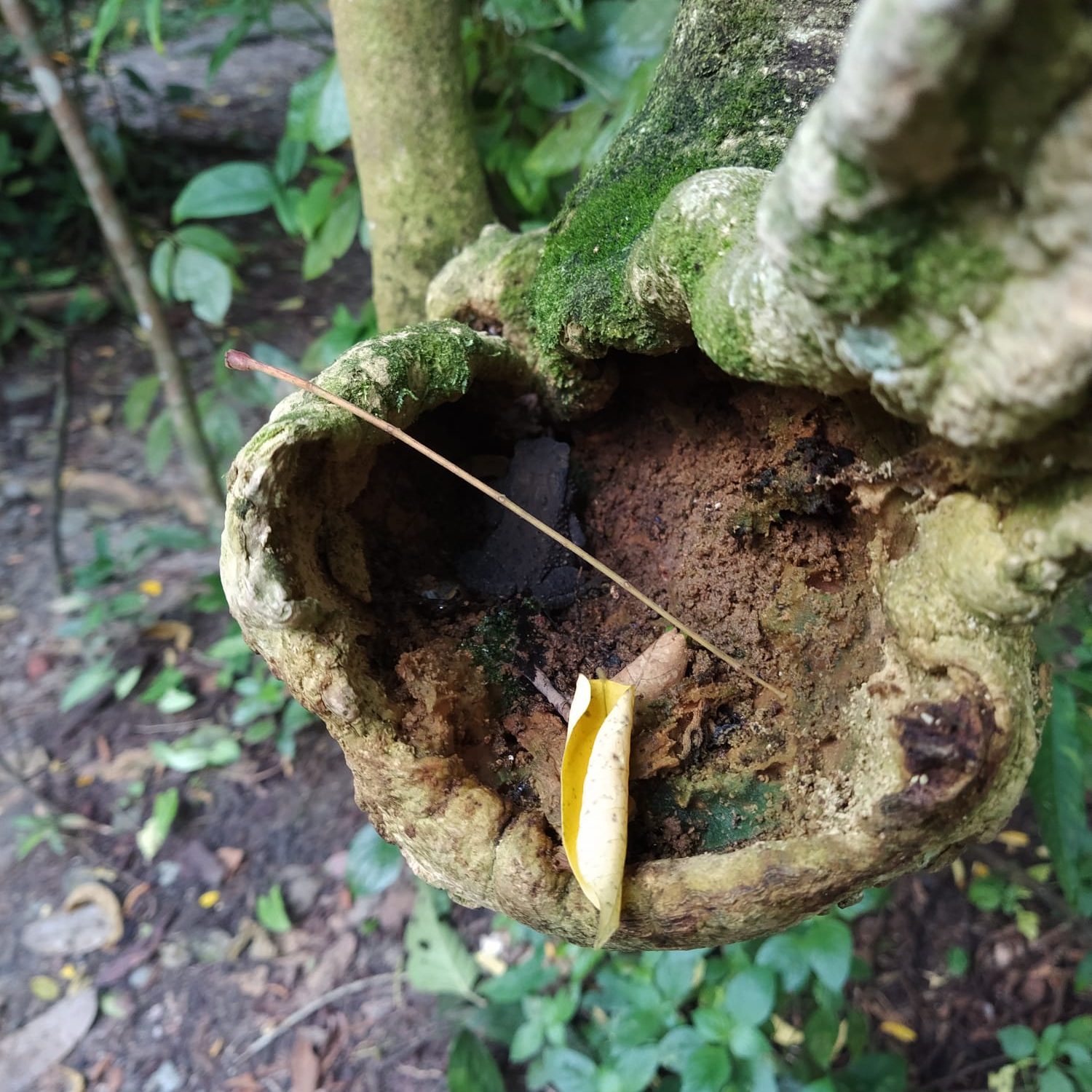
It has been a long long time since I had to wake up before the sun rose. Having no experience in birdwatching, I left home light: with a water bottle, insect repellent and my phone for taking photos. I realised my mistake when I arrived and saw people armed with some of the biggest cameras I have ever seen. Lesson learnt for the next time, as I only got photos of the macaques and a toad resting in a tree. Cute, but not the photos I was expecting on a bird tour.

very cute and tiny toad

The tour itself was very enjoyable, despite my lack of photos. It has been quite some time since I last had the time to go on a nature walk, and I was glad that we spotted quite a number of interesting wildlife. Or heard, mostly. I never knew how noisy the forest could be in the early morning, but what was even more amazing was that our guide Jeff could match the multitude of calls to specific species of birds. Not only that, he was able to pinpoint the bird on trees with little effort. Thanks to him, I was able to take a look at them through a borrowed pair of binoculars, though most of the time the tiny birds only appeared as a tiny black blob perched at the top of very tall trees. A better view of the birds were offered through the photos taken by the aforementioned gigantic cameras. There were Asian glossy starlings, heard and spotted right at the start of the walk. Then there was a racket-tailed drongo resting on a tree, though the poor thing had lost both of its “rackets”. Other birds spotted included the Dollarbird, the Green-backed flycatcher, a Red Junglefowl walking through the trees and Long-tailed parakeets. We heard many more birds that we sadly did not manage to catch a glimpse of, such as the Red-crowned Barbet and the Dark-necked Tailorbird.

On top of learning about different types of birds, we also learnt about some important plants that were found in the nature park. There is the Australian Mulberry Tree, which is a food source to many birds as well as other animals. There was a spot in direct view of a large Australian Mulberry Tree that was supposedly great for spotting birds, but that tree was taken over by macaques, hence there was no bird in sight. Yellow stem-figs is another major food source, with many trees scattered across the park. We also passed by a magnificent Strangler Fig, which is said to be a keystone species. Such figs can increase the conservation value of a nature park, as explained by Jeff, due to its ecological and sometimes cultural importance.

All in all, it was a very enlightening trip that taught me many things about birds and nature. The refreshing walk was well worth the effort of dragging myself out of bed before 6AM and I look forward to more chance encounters with different wildlife on future field trips!

A Walk on World Frog Day

On the 20th of March, 2022, I went to Dairy Farm Nature Park to learn more about bird-watching from the amazing and talented BFF Alumni Jeff Tan and Zachary Chong. Jeff was a whiz with bird-calls and his attentiveness bagged us a sighting of a female Green-backed Flycatcher, while Zachary had a keen eye which spotted the Asian Fairy-bluebirds, and whipped out a bashed up field guide (shows how much dedication he had in learning about bird identification) on the birds of Singapore to enlighten us BFFers on the variety of birds we spotted.

I was led by Jeff, and his wealth of experience with bird-watching really shined in this field trip. We started our journey from before the MOE Dairy Farm Outdoor Adventure Learning Centre. There was a tall tree where a large number of Asian Glossy Starlings were flocking about. From the get-go, we had to use our sense of hearing, as the birds are difficult to spot through the poor lighting and thick canopy. From listening to the ruckus up in the tree, Jeff was able to identify the species of the birds. I wish I will one day be able to master the identification of birds by their calls too.

Next, we walked along what Jeff and Zachary introduced as the “Walk of Shame”, a path that runs parallel to the road that is just separated by a layer of trees. Perhaps the area was too close to human activity, hence fewer wildlife could be seen, earning the title of the “Walk of Shame”. Along this path, Jeff pointed out a tossed up patch of ground, which I learnt was the deed of wild boars as they dug for food. At roughly the same point, we looked into a distant tree that emerged far taller than the neighbouring ones, and saw a couple species of birds.

Whipping out my binoculars, I spotted the Oriental Dollarbird and the Long-tailed Parakeet. The birds were a very far distance away, so Zachary was kind enough to show us how the birds look like with the field guide. We then proceeded toward the highlight of the trip, which was taking a walk along Wallace Trail. On the way there, we heard a distant bird-call, which I was unfamiliar with. It sounded like a raptor, but that’s about as much I could tell. We shall find out what it is shortly.

Fast forward to the walk along Wallace Trail, the weather was not doing too well. The sky was overcast, the winds were blowing, and birds did not like those conditions very much. Nonetheless, we were still very lucky that Zachary spotted a couple of Asian Fairy-bluebirds in the distance, which I attempted a shot but all I got was a blur one.

A very blur shot of a male Asian Fairy-bluebird.

At the sight of the Asian Fairy-bluebird, Jeff shared his knowledge on these beautiful birds. It appears that they display sexual dimorphism, where the male can be told apart from the female because they look visually different. As I only managed to snap a photograph of the male (as shown above), we are unable to see how the female looks like in comparison. However, a quick Google search will show that females have a turquoise-blue colouration instead of the blue and black of the males.

We also saw a Greater Racket-tailed Drongo, which unfortunately appeared to have lost both its “rackets”. The group then ascended a little up-slope, and we reached a little clearing where a number of Long-tailed Macaques were feeding on an Australian Mulberry tree. There was a little tree cavity which Jeff peeked into, and spotted an Asian Common Toad. Did I mention it was World Frog Day on the day of the field trip? Well, it’s a toad, but close enough. Unfortunately, with the overcast weather and the menacing macaques dominating the tree, we did not have much luck spotting birds in the area, and continued on our walk.

We then came to a small viewing platform on the other side of the clearing, where more birds were sighted. First, we heard a dull, repetitive call, which Jeff attributed to that of a Red-crowned Barbet. It’s a pretty interesting-looking bird, but unfortunately we only managed to hear its calls from a distance. However, a small, brown bird flitted into our vision on one of the trees. It was an Asian Brown Flycatcher!

My photography skills are about as good as my bird-watching skills, but here is the Asian Brown Flycatcher.

But, Jeff spotted another movement in a dark, shaded area among the branches of a tree. Turns out, we managed to spot a female Green-backed Flycatcher as well!

Just look at how grainy this image is, and you can imagine how dark the area was. Yet, our BFF Alumni Jeff was able to spot this female Green-backed Flycatcher!

After a good sighting of a couple of flycatchers, we winded down the path back towards the Wallace Education Centre. There, I learnt more about the Wallace Line, which was a discovery made by naturalist Alfred Russel Wallace who independently proposed the Theory of Evolution (he was well-known for his work in the Malay Archipelago, and the trail was named after him as well). It was also here that Jeff revealed that the call we heard earlier in our walk was made by the Changeable Hawk-Eagle. It’s a shame we did not get to see one that day.

And finally, to end the trip off, the group walked toward Singapore Quarry, where we sighted some more Long-tailed Parakeets, some Critically Endangered Straw-headed Bulbuls, a common Yellow-vented Bulbul, and a bee-eater (likely Blue-tailed Bee-eater). With that, we ended the trip with a scenic view of Singapore Quarry.

It has been an enriching field trip, thanks to our BFF Alumni Jeff and Zachary, who not only shared about bird identification, but also conservation (the hunting of Straw-headed Bulbuls for the songbird trade, unethical practises by some of our local bird photographers, etc.), habitat (such as the Yellow Stem-Fig, Strangler Figs, Fishtail Palm, the Albizia tree, etc.) and how to enjoy nature walks. I look forward to visiting nature parks and reserves more now!

1st BFF Field Trip at Sungei Buloh Wetlands Reserve

The last time I visited Sungei Buloh was when I was in primary school. Now, I am in polytechnic and so much has changed at the interesting, wildlife-filled Sungei Buloh Wetland Reserve.

Waking up at 5.30am, I was super tired but I still tried to travel to the wetland reserve with an open mind to learn more about mangrove habitats and I was not disappointed. My experienced guide, Ivan, not only taught us about the various wildlife living in the mangrove habitats but also educated us on many conservation efforts that we can be a part of to help preserve the diminishing mangrove habitats in Singapore. With his keen spotting eyes, we were also able to see many different wildlife flora and fauna in our walk around the reserve.

After meeting up at the Nature Gallery, we proceeded to the Mangrove Boardwalk. En route, we stopped at a small pond where Ivan quickly educated us on the various fish species introduced into the pond. We were then met with a colony of roosting bats on top of a sheltered area.

Be wary of their droppings and do not disturb them in the morning (they need their rest ;))

At the Mangrove Boardwalk, we saw many species of mudskippers, tree-climbing crabs and tiny horseshoe crabs. It was fascinating to learn from Ivan how the mudskippers would dig their “territory burrow” by scooping mud with their mouths then spitting them out in the surrounding area. The end result of this would be a deep burrow with a J-funnel down that will be used in the future for breeding their offspring.

Example of a mudskipper burrow. The mudskippers were seen digging their burrow from beneath the water’s surface by diving into the water then coming out to spit mud out before going back in again.

After completing the boardwalk, we crossed the Main Bridge to the Migratory Bird trail to try our luck at spotting some migratory bird species. Sadly, as the peak season was ending soon, most of the birds have probably already flown north to their breeding grounds but we still managed to spot some herons, egrets and redshanks with the keen eye of our birdwatchers, Ivan and Collin. We were also lucky enough to spot some huge monitor lizards, estuarine crocodiles, including the famous resident crocodile, Tailless, and resident macaques. Nearing the end of our walk, Ivan also shared with us more information about the shore birds that we spotted, their typical travel patterns as well as his own experiences while observing these birds.

Resident crocodile, Tailless

While there were many wonderful experiences on the trail, I also witnessed some unfortunate sights. Parts of the mangrove were filled with rubbish that probably washed up during the high tide periods from landfills near Malaysia and Singapore (due to Sungei Buloh’s close distance to the Straits of Johor). As explained by Ivan, mangrove areas are not as easy to clean up as beaches due to land constraints and the community’s own stereotypes about the mangroves (being smelly and a big swamp area), as such, this waste will probably remain in these areas for a long period of time. In addition, erosion sped up by climate change and other environmental factors have also led to certain mangrove plants not being able to get the nutrients that they need. Right now, many mangrove trees are trying to hang on by their last “roots” but if the situation worsens, they may soon “collapse”.

Picture of trash found in the mangrove.

Introduction of new species of wildlife, from the escapee fishes from the nearby fish farms to the common house crows and domestic pets (stray dogs in particular), have led to increased competition in the mangrove habitats as well as diminishing numbers in certain wildlife species found at Sungei Buloh.

Mangroves are slowly diminishing from Singapore due to their inability to adapt to certain areas of water as such, we should do our best to protect our remaining mangroves. While there are many constraints to what we can do, there are also still many other small and simple things we can do. By educating others about the mangroves in Singapore, we can change their perceptions of mangrove habitats and direct them to help conserve these precious habitats. Educating people about the various wildlife species found in these mangroves can also help spark their interest in learning more about mangrove habitats as well as ensure that the flora and fauna there are not disturbed and not taken away from their natural habitat.

To sum up this reflection, I had an enriching and enjoyable nature walk at Sungei Buloh Wetland Reserve with Ivan (our guide), Collin (our BFF-er) and Gavin (our facil). I learned so much and managed to spot so many new wildlife species that I did not know about before. Looking forward to future BFF field trips to come!

1st field trip to DFNP bird walk (20/3)

It was 5.45am. I just woke up. I felt tired and a little grumpy. “Why did I sign up for this without looking at the starting time”. But it doesn’t matter. I dragged myself out of bed as I had to get to Dairy Farm Nature Park by 7 for a guided walk led by Jeff and Zachary from the perspective of a bird watcher.

My group was led by Zachary. Kicking off the walk, we started off by talking about the history of DFNP. It was a former pepper and gambier plantation turned dairy farm turned park, hence its name. Wow who would’ve guessed!

Of course that wasn’t the main highlight. Thanks to Zachary, our group was able to spot many species of birds and other groups of animals like the Gigas ant, changeable lizard and slender squirrels. Honestly, I was very impressed by Zachary’s ability to spot so many animals himself (Like, how did he spot that Gigas ant on the floor?!?!). I guess birdwatching is an activity to train your senses.

Two species of birds which especially stood out to me were firstly, the Greater Racket Tailed Drongo. Their masterful mimicry, being able to mimic the cries of eagles to scare away competitors and beautiful racket tails, I thought were very cool. In contrast, the more unimpressive looking straw headed bulbul, despite its status as a globally critically endangered species resides right here in Singapore, and we had the opportunity to see it – and this is a testament to Singapore’s surprising biodiversity despite its small size.

Picture of a Drongo which I took on my crappy Android camera HAHA don’t clown me

So did I enjoy myself even after waking up so early? Certainly. I had a lot of fun learning about Singapore’s birds and other wildlife thanks to Zachary’s wonderful guidance and if we arrived any later, not as many birds would have been seen. I always loved going on nature walks with my friends and family but never really knew how to ID any wildlife I saw and it’s a shame because I may have come across a rare species without knowing. Now, I would be able to educate (albeit to a limited extent) my friends and family on Singapore’s wildlife.